The last 747
The last of 1,574, delivered to Atlas Air on 31 January 2023
A factory that had begun the journey in 1967 closed a production run of 1,574 aeroplanes with a 747-8 Freighter, and with the people who had built the first ones invited back.
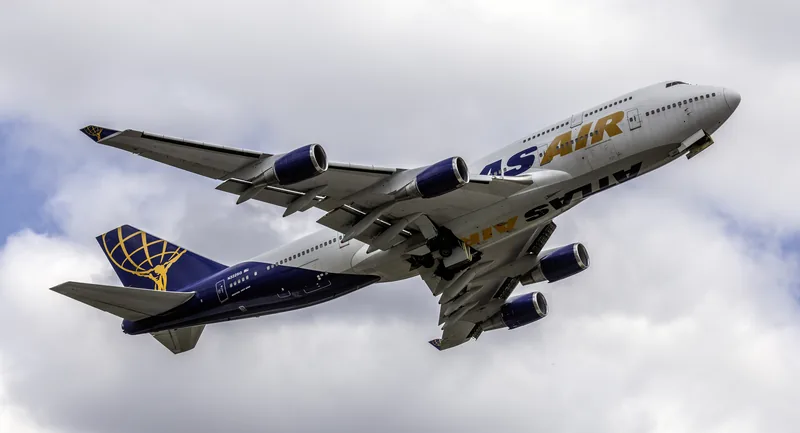
The photograph above is not the last 747. It is Atlas Air 747-400 N322SG, taking off from Baltimore-Washington International Airport on 6 September 2024. Atlas, in Boeing’s delivery release, was already “the largest operator of the 747,” and it was still flying 747-400s after the line had closed. The last aeroplane itself was a 747-8 Freighter, handed over on a winter day in Everett.
Everett, 31 January 2023
Boeing’s release is dated 31 January 2023 and datelined Everett, Washington. “Boeing and Atlas Air Worldwide joined thousands of people — including current and former employees as well as customers and suppliers — to celebrate the delivery of the final 747 to Atlas, bringing to a close more than a half century of production.” [source]
The people who had started it were in the room. “Boeing employees who designed and built the first 747, known as the “Incredibles,” returned to be honored at the Everett factory where the journey of the 747 began in 1967.” And then the official count, in one sentence: “The factory produced 1,574 airplanes over the life of the program.” [source]
Boeing’s 747-8 commercial page, in the copy saved on 16 November 2026, gives the same programme total in a longer breath: “Since production began in 1967,” and after the first 747-100 test flight in 1969, “more than 100 customers have purchased 1,574 aircraft, logging more than 118 million flight hours and nearly 23 million flight cycles.” [source] The 1,574 is the same official total on both Boeing desks. The flight hours and cycles are from the commercial page.
The last aeroplane, and who received it
Stan Deal, then president and chief executive officer of Boeing Commercial Airplanes, called the 747 “the airplane that ‘shrank the world,’” and said it had “revolutionized travel and air cargo as the first widebody.” He added: “It is fitting to deliver this final 747-8 Freighter to the largest operator of the 747, Atlas Air, where the ‘Queen’ will continue to inspire and empower innovation in air cargo.” [source]
John Dietrich, then president and chief executive officer of Atlas Air Worldwide, placed his company in the same story: “Atlas Air was founded over 30 years ago with a single 747-200 converted freighter, and since then, we have spanned the globe operating nearly every fleet type of the 747, including the Dreamlifter, Boeing’s 747 Large Cargo Freighter, for the transport of 787 Dreamliner parts.” [source] The Dreamlifter is named there as a 747 Large Cargo Freighter, and as a way of moving 787 parts. This desk leaves that official description as it is.
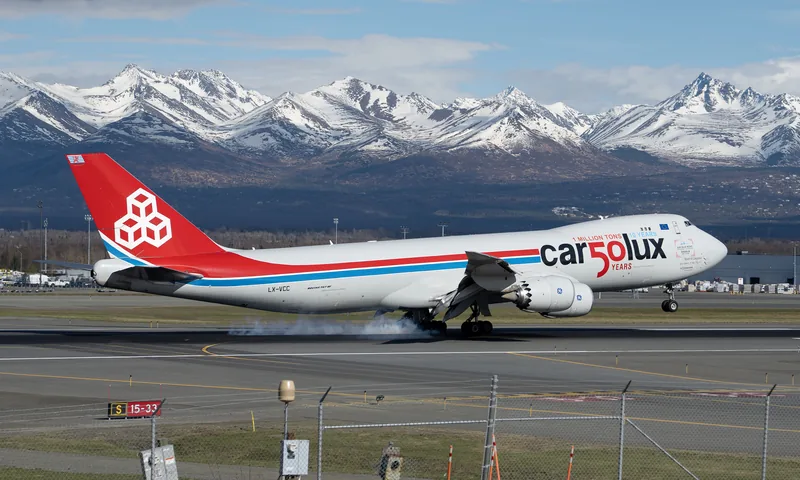
Other 747-8 Freighters, such as the Cargolux aeroplane landing at Anchorage in May 2026, show the same later cargo shape still at work. They are not the final delivery aeroplane. The hinge at the front, and the Shuttle Carrier Aircraft stills that show another job the type was given, live on the other jobs page. The official beginning of the story — 1967, a 1968 rollout, a 1969 first flight — is on the first flight page.
Enjoyed this desk on why the 747 has a hump, and the two official stories behind it?
No pop-ups. No intrusive advertising. Just interesting stuff. A little support helps the next aeroplanes.im site get built.