Why the hump?
A nose that opens, a cockpit that had to move, and a hump that later grew seats
The official story is almost domestic. Someone wanted the front of the aeroplane to open. The pilots could not sit in the hinge. Everything else follows from that.
The signature desk
Why does the 747 have a hump?
Two official stories, kept side by side. First a nose that had to open. Then a hump that grew seats.
A nose that opens
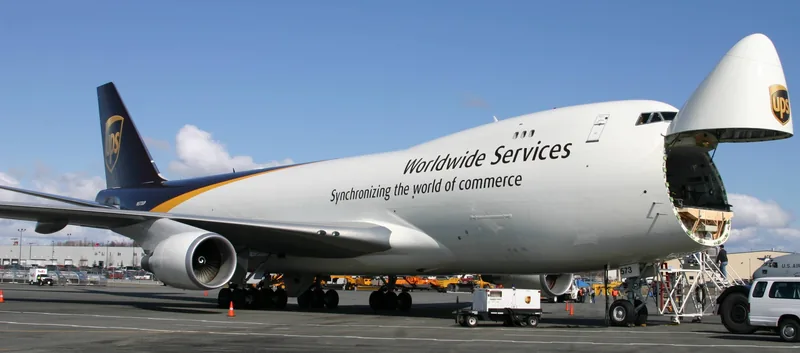
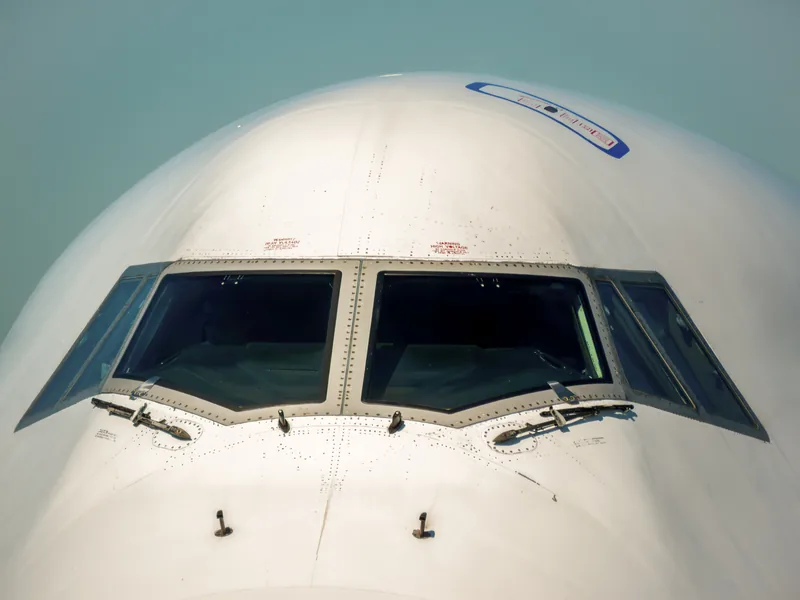
Bruce Hathaway, writing in Smithsonian magazine on 15 November 2007, put the story in Juan Trippe’s hands. Trippe, “a key customer for the 747, told Boeing, the manufacturer, that he doubted the aircraft would be commercially viable as a passenger plane. So he insisted that it be easily convertible to a cargo plane.” That, the article says, “meant a nose that could be opened and closed on a top hinge.” And “a nose that would open and close would be an impossible place for the cockpit.” Wiring and control cables could not be left “bending back and forth as the nose opened and closed.” “So the cockpit was put up behind the nose. To make room for the cockpit, and to keep the plane maximally aerodynamic, there had to be a hump.” [source]
Then it grew seats
The same Smithsonian article adds a second chapter: “Later versions of the 747 extended the hump farther back and made room for more first-class seats.” [source] The National Air and Space Museum describes those later versions in its own words. The 747-400 “features an extended upper deck and winglets.” The 747-8 “adds about 5.6 meters (18 feet) of fuselage and has engines derived from the Boeing 787.” [source] Those later seats and that extra length are not the reason the hump was there in the first place.
The cargo request
In November 2007, with a new National Air and Space Museum exhibition about to open, Smithsonian magazine published Bruce Hathaway’s short, sharp account of the 747’s silhouette. Pan Am’s Juan Trippe, “a key customer for the 747,” had told Boeing “that he doubted the aircraft would be commercially viable as a passenger plane.” So “he insisted that it be easily convertible to a cargo plane.” [source]
Convertibility, in that article, is not a vague wish. It “meant a nose that could be opened and closed on a top hinge.” Once you have a nose that hinges, you have a problem that every later photograph of an open 747 freighter still illustrates. “A nose that would open and close would be an impossible place for the cockpit.” The wiring and control cables between the flight deck and the rest of the aeroplane could not be left “bending back and forth as the nose opened and closed.” That, Hathaway writes, “would have been a very bad idea.” [source]
Up, and behind the nose
So the cockpit was moved. “The cockpit was put up behind the nose.” And then the shape that everyone now treats as inevitable appears in a single official sentence: “To make room for the cockpit, and to keep the plane maximally aerodynamic, there had to be a hump.” [source] The raised windows in later photographs are that decision, still visible years after the first flight.
Hathaway, who had climbed “several flights of stairs” to look into the cockpit in the museum, found it “smaller than my cubicle,” with seating for “the pilot, co-pilot and navigator” “really tight.” The contrast is the joke the aeroplane has always carried: an enormous hull, and a flight deck that had to be tucked up out of the way of a door. [source]
Then the hump grew seats
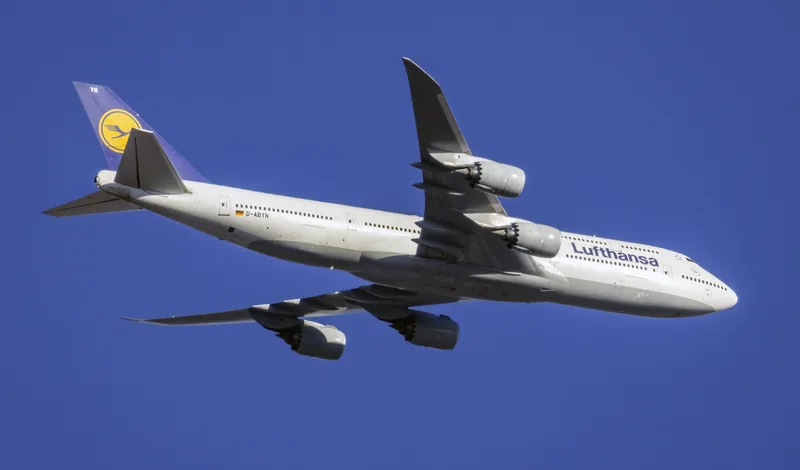
The same magazine article adds the later chapter in one line: “Later versions of the 747 extended the hump farther back and made room for more first-class seats.” [source] The National Air and Space Museum, writing on its Evolution of the Commercial Airliner page, names those later versions without borrowing the magazine’s wording. The 747-400 “features an extended upper deck and winglets.” The 747-8 “adds about 5.6 meters (18 feet) of fuselage and has engines derived from the Boeing 787.” [source]
Those later seats, and that extra length, are not the reason the hump was invented. They are what happened once the hump was already there, and once airlines had discovered that a raised upper deck could hold people as well as a flight deck. This desk keeps the two official stories in that order: first a hinge, then the seats.
If you want the dates that sit around the shape — the first flight, the first passenger service, the last delivery — they live on the first flight and last 747 pages. The 747-400 and 747-8 page keeps the museum’s and Boeing’s later figures unblended. A typographic fact sheet of the same story can be taken from the downloads.
Enjoyed this desk on why the 747 has a hump, and the two official stories behind it?
No pop-ups. No intrusive advertising. Just interesting stuff. A little support helps the next aeroplanes.im site get built.