For families
A 747 you can explain, and two museums you can point to
The official story is simple enough to tell beside a model, or under a real nose. The dates only need to be kept in the right rooms.
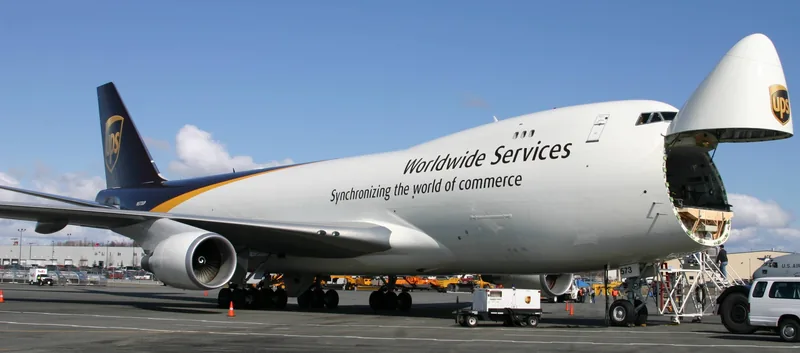
If you have a child who has only ever seen a 747 as a silhouette, the hump is the thing they will ask about. The official answer is almost a story with a hinge in it. Someone wanted the front of the aeroplane to open, so that it could carry cargo as well as people. The pilots could not sit in a door. Their cabin was put up behind the nose, and a hump was built to hold it. Later, more of that hump was used for seats. [source]
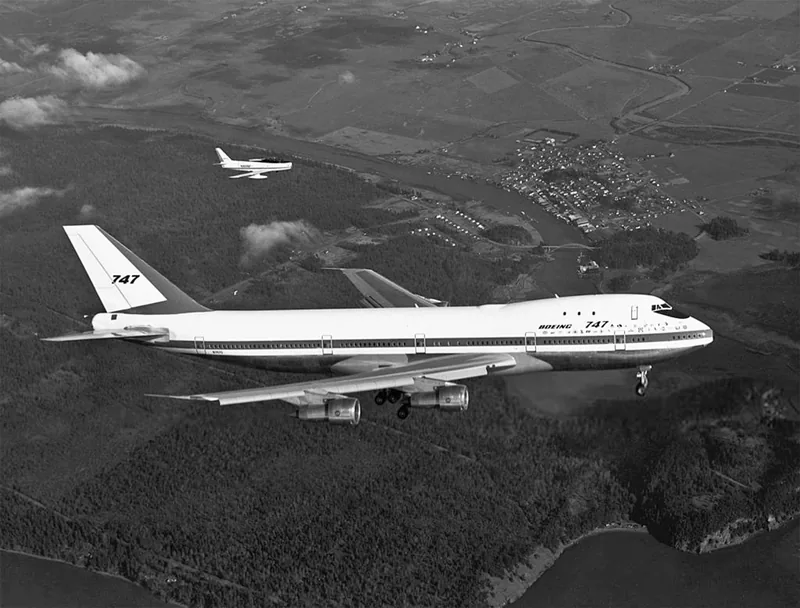
The first flight, if you want a date for a first take-off, is 9 February 1969. The photograph with the little chase plane is that day, over Puget Sound. Airline service, if you want a date for passengers, is 1970, and some official pages say January 1970, and Boeing names 22 January 1970, New York to London, for Pan Am. Those are not two attempts at the same fact. They are two different events. [source] [source] [source]
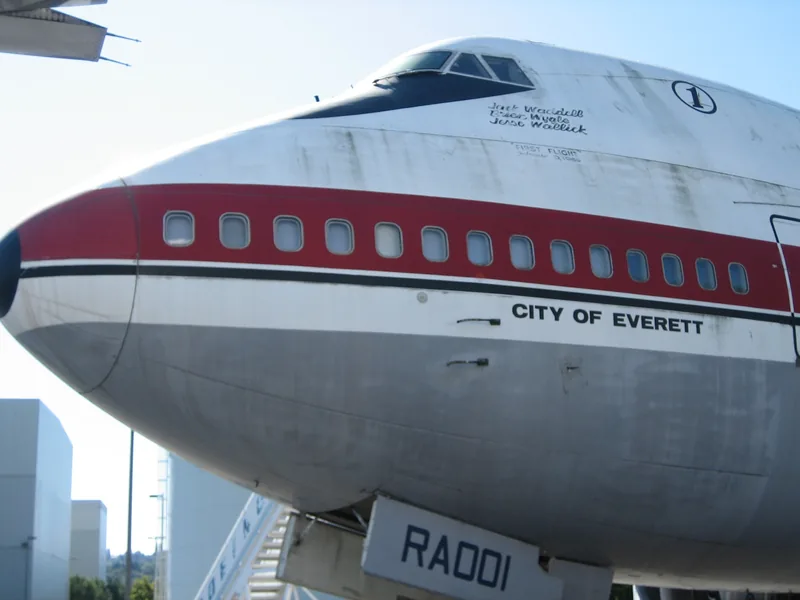
If you can get to a museum, two official places sit in this story. The National Air and Space Museum, in Washington, has a real 747 nose in the America by Air exhibition: N601US, cut back to frame station 520, thirty-five feet of it in the curator’s telling. Smithsonian magazine, visiting at the opening, called the section on the wall some 36 feet. You can tell both figures and not have to choose. [source] [source] The preserved prototype, photographed later at the Museum of Flight on Boeing Field, is a place to see the whole aeroplane, without treating the painted lettering as a history book.
When the line ended, on 31 January 2023, 1,574 aeroplanes had been built, and the last one was a freighter, delivered to Atlas Air. That is a good last sentence for a family telling: the jumbo that had carried so many people left the factory, at the end, as a cargo aeroplane. [source]
A typographic fact sheet, with no photographs, can be taken home from the downloads page. A short quiz sits next door, and none of the answers need anyone to invent a number.
Enjoyed this desk on why the 747 has a hump, and the two official stories behind it?
No pop-ups. No intrusive advertising. Just interesting stuff. A little support helps the next aeroplanes.im site get built.