747.aeroplanes.im
The 747, the hump, and the last of 1,574
A jumbo with a raised cockpit, a nose that could open, and two official dates that should never be sanded into one: a first flight in 1969, and airline service in 1970.
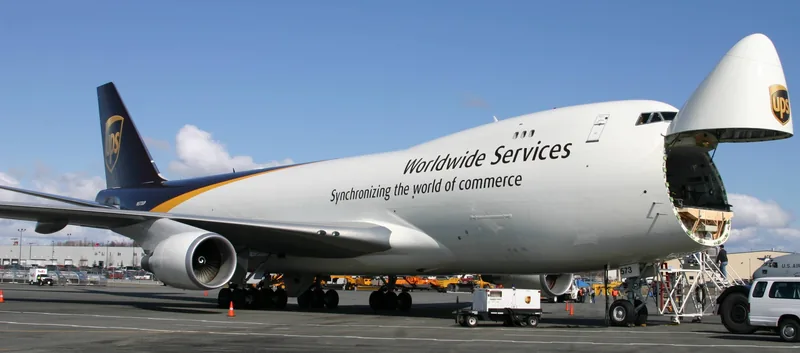
Stand under a 747 and the first thing that happens is you look up. Bruce Hathaway did that in November 2007, beside the front landing gear, and then he asked the question that still makes a good desk: why the hump? His answer, in Smithsonian magazine, begins with Juan Trippe, who wanted a cargo aeroplane that could open at the nose. The cockpit could not live in a hinge. It was put up behind the nose, and “there had to be a hump.” [source]
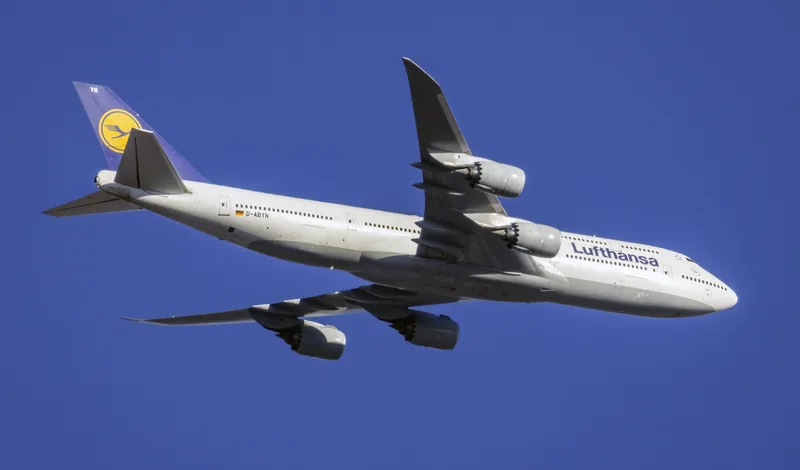
Later, the same official story grows a second chapter. Later versions, Hathaway writes, “extended the hump farther back and made room for more first-class seats.” The National Air and Space Museum describes those later aeroplanes in its own words: a 747-400 with “an extended upper deck and winglets,” and a 747-8 that “adds about 5.6 meters (18 feet) of fuselage.” [source] [source] The seats came after the hinge. The hinge is why the flight deck sits where it does.
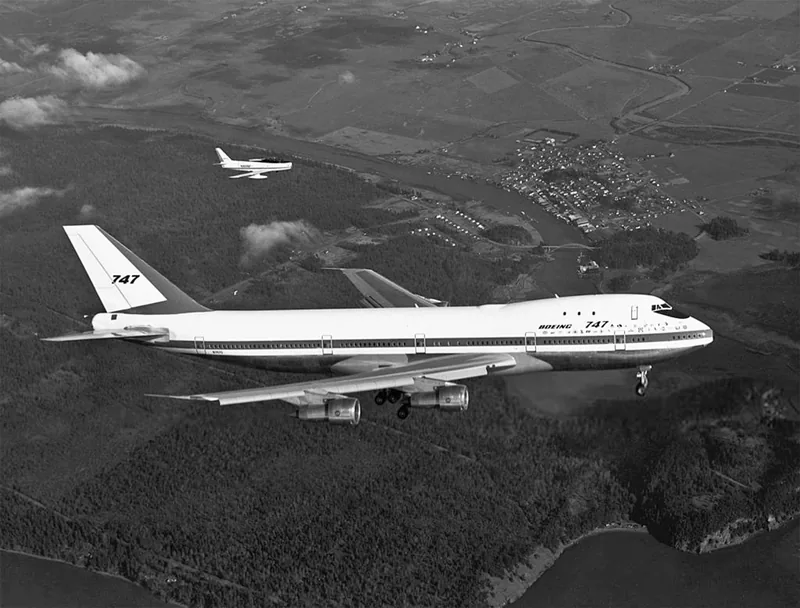
The first flight and the first airline service are neighbouring dates, and this desk keeps them neighbouring rather than blended. The San Diego Air and Space Museum’s catalogue caption, on a photograph of the 747 with an F-86 chase plane, says the first flight was “February 9, 1969,” over the Puget Sound area. A caption on Boeing’s 747-8 page says the same: “The first 747 takes off on its first flight Feb. 9, 1969.” [source] [source]
Airline service is a later official sentence. The National Air and Space Museum says the 747 “entered service in 1970,” and, on its Pan American page, “the first Boeing 747 entered service in January 1970.” Boeing’s 747-8 page is more exact still: “On Jan. 22, 1970, the first 747 entered service on Pan Am Airlines’ New York–London route.” [source] [source] [source] Those wordings all describe service, not the first take-off.
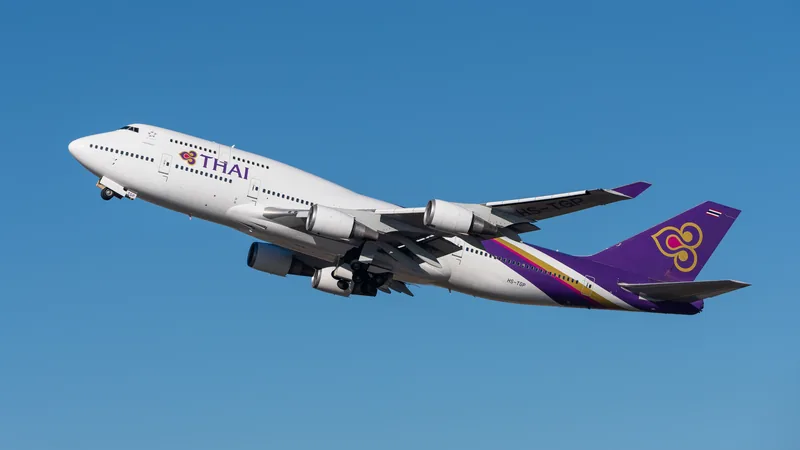
The type then grew. The museum’s 747-400 can fly 416 passengers 13,450 kilometres, with that extended upper deck. The 747-8, on the same page, “can carry about 467 people a distance of 14,800 kilometers.” Boeing’s 747-8 Intercontinental overview, a 2018 historical PDF, labels “747-8 (410 seats)” and gives a range of 7,730 nautical miles, or 14,310 kilometres, at maximum take-off weight with a full passenger payload, and a length of 76.3 metres, or 250 feet 2 inches. [source] [source] Both desks are official. This site does not average them.
And then the line ended. On 31 January 2023, at Everett, Boeing and Atlas Air celebrated “the delivery of the final 747 to Atlas,” “bringing to a close more than a half century of production.” The factory that had begun the journey in 1967 “produced 1,574 airplanes over the life of the program.” The last aeroplane was a 747-8 Freighter, and it went, in Boeing’s words, to “the largest operator of the 747.” [source]
This is a story-led desk, not an official caveat desk. The small differences between official pages — 36 feet on a gallery wall and 35 feet back to a frame station, 231 feet in a magazine and 76.3 metres in a Boeing PDF, “about 467 people” and “410 seats” — are kept honest on the sources and field notes pages, and they are never stirred into a single invented figure.
If you have come from aeroplanes.im, or from a sister desk such as Concorde or the 737-800, you are in the same family. The 747 is the jumbo on that shelf: a raised cockpit, a cargo nose, and a production run that ran from 1967 to the last delivery in 2023.
Enjoyed this desk on why the 747 has a hump, and the two official stories behind it?
No pop-ups. No intrusive advertising. Just interesting stuff. A little support helps the next aeroplanes.im site get built.